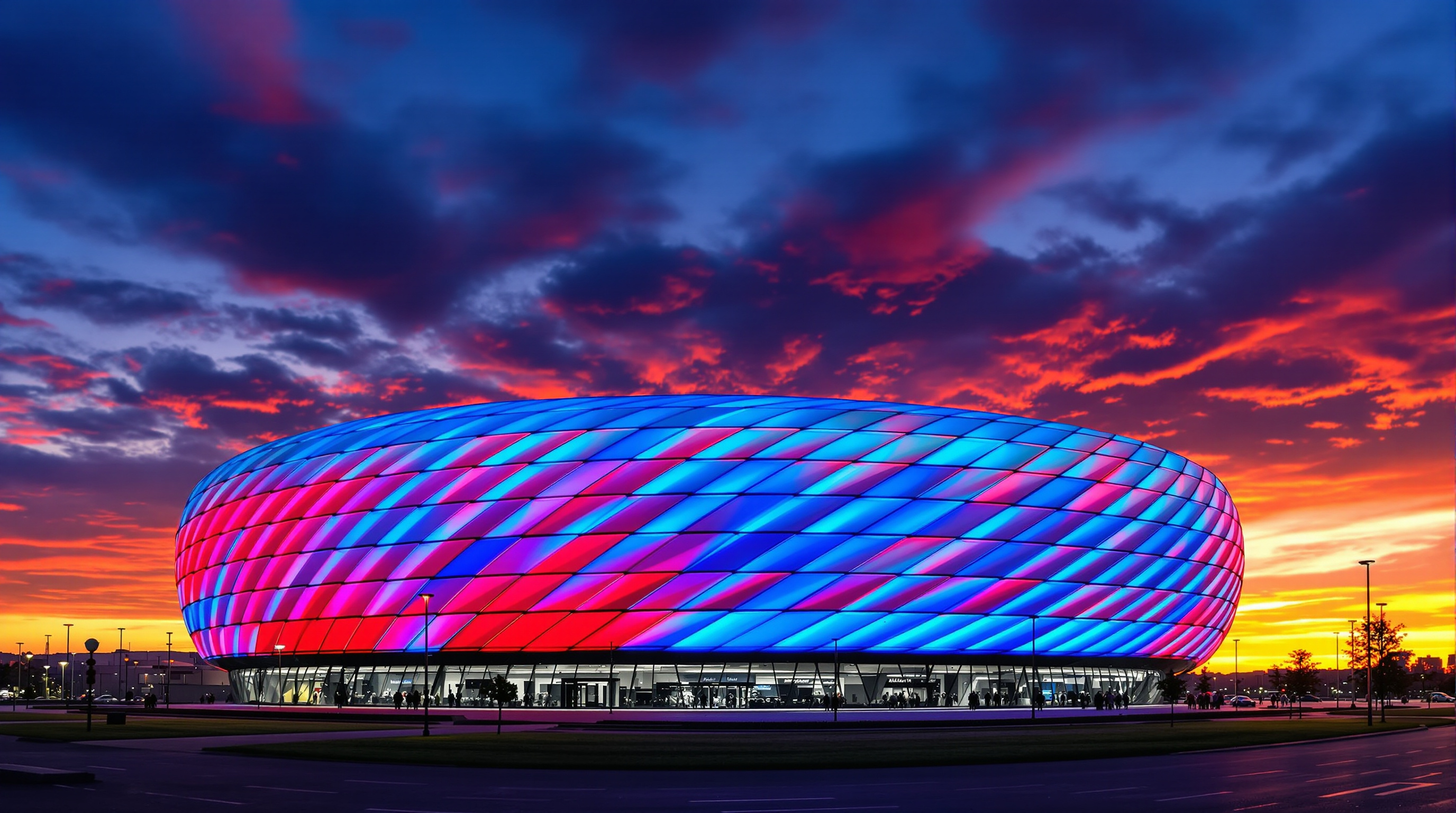
Germany's twelve host cities provided world-class venues for the 2006 FIFA World Cup. Each stadium combined modern facilities with passionate atmospheres, creating the perfect stage for football's greatest tournament.
| Stadium | City | Capacity | Key Matches |
|---|---|---|---|
| Olympiastadion | Berlin | 74,228 | Final, Quarter-final |
| Allianz Arena | Munich | 66,016 | Opening Match, Semi-final |
| Westfalenstadion | Dortmund | 65,982 | Semi-final (GER vs ITA) |
| Veltins-Arena | Gelsenkirchen | 53,804 | Quarter-final (ENG vs POR) |
| Waldstadion | Frankfurt | 48,132 | Third Place Match |
| Volksparkstadion | Hamburg | 51,055 | Quarter-final |
| Gottlieb-Daimler-Stadion | Stuttgart | 54,267 | Semi-final (FRA vs POR) |
| RheinEnergieStadion | Cologne | 46,134 | Round of 16 |
| AWD-Arena | Hanover | 44,652 | Round of 16 |
| Zentralstadion | Leipzig | 44,199 | Group Stage |
| Frankenstadion | Nuremberg | 41,926 | "Battle of Nuremberg" |
| Fritz-Walter-Stadion | Kaiserslautern | 46,615 | Group Stage |
Berlin - Olympiastadion (74,228 capacity)
The historic venue, built for the 1936 Olympics, hosted the World Cup Final and four other matches. Its iconic architecture and central location made it the natural choice for the tournament's conclusion.
Munich - Allianz Arena (66,016 capacity)
The futuristic stadium, with its illuminated exterior panels, hosted the opening match between Germany and Costa Rica. Its distinctive design made it one of the tournament's most photographed venues.
Dortmund - Westfalenstadion (65,982 capacity)
The home of Borussia Dortmund's famous "Yellow Wall" hosted six matches, including Germany's semi-final defeat to Italy. The passionate atmosphere was consistently praised.
Gelsenkirchen - Veltins-Arena (53,804 capacity)
The Schalke 04 home ground, featuring a retractable roof, hosted five matches including England's quarter-final defeat to Portugal.
Frankfurt - Waldstadion (48,132 capacity)
Five matches were played here, including the third-place match between Germany and Portugal. The stadium's location near central Frankfurt provided excellent accessibility.
Hamburg - Volksparkstadion (51,055 capacity)
Five matches at this venue included Argentina's group stage victory over Serbia and Montenegro, featuring the famous 24-pass goal.
Stuttgart - Gottlieb-Daimler-Stadion (54,267 capacity)
Five matches, including France's semi-final victory over Portugal, showcased this venue's excellent sightlines and atmosphere.
Leipzig - Zentralstadion (44,199 capacity)
Five matches were played at this east German venue, symbolizing reunification through football.
Venue Infrastructure and Player Welfare
Each of the twelve host stadiums was equipped with medical facilities that met stringent FIFA standards. Pitch-side medical teams could respond to injuries within seconds, while rehabilitation suites within each venue allowed for immediate post-match treatment. The quality of the playing surfaces was maintained by specialist groundkeeping teams, with hybrid grass technology beginning to emerge at venues like the Allianz Arena.
The consistent pitch quality across all twelve venues was praised by players and coaching staff alike, contributing to the relatively low incidence of muscular injuries compared to previous World Cup tournaments. The investment in stadium infrastructure for 2006 set a benchmark that subsequent host nations have aimed to match or exceed.
All twelve venues were subsequently used for domestic competitions, with several hosting matches at the 2024 European Championship.
For more about German football venues, visit Bundesliga.